HOME
About
Contact
TOOLS
Research Tools
GLOBALIZATION
Globalization Home
Resources/Links
Economics Books
Courses
G101
Description
Start
G102
Description
Start
Sample Modules
from G101 & G102
Definitions
Unequal Expansion
Comparative Advantage
GDP: Calculation
IMF
Disappearing Borders
Global Consciousness
MINI COURSES
About Mini Courses
Outsourcing 101
The Complicity Problem
Taxes 101
Income Tax Brackets
Effective Tax Rates
Game: Your REAL taxes
Global Warming 101
Gore vs. Skeptics
Business Ethics 101
Basic Business Ethics
Critical Thinking 101
Intro to Critical Thinking
FILMS
Films Home
Film Books
The Magic Mountain
Film Theory Links
Film Info Links
Aristotle's Six Elements
Visual Narrative: Ran
Recommended Films
Seven Mistakes of
Film Criticism
What Works and
What Doesn't
Miscellaneous Reviews
Random Comments
Lesser-Known Films
Films and Communism
Comics
Help support this site by placing book or merchandise orders through us to Amazon.
|
FILMS and POPULAR CULTURE
Comments on Film
PURPOSES OF THESE PAGES
Films can provide entertainment, an opportunity for intellectual reflection, and a means to understand the depths of the human heart. But it has become harder to find films that provide all of these things. Often, critical praise and box office reports are poor indicators of quality.
These pages were designed with the following purposes in mind: (1) to provide a guide to quality films; and (2) to provide resources for both popular and academic criticism of films. Links to sites supporting other critical perspectives are not necessarily endorsements on my part of the views expressed at these sites; they simply express views I feel deserve more attention.
In addition, I have supplied some comments on films and some alternative groupings of films. The structure of social narratives intrigues me, as does the phenomenology of film and the structure of film. There are many sites dedicated to similar topics and many scholars spend their full time on such topics; these pages may be a useful starting place for further research. Seven Mistakes of Film Criticism is a popular page. I recommend everyone read the excerpt from the Magic Mountain. The entire topic of the relationship between the thematic content of films and globalization is probably still an under-explored area. - A. D. Birch, Ph.D.
BEST OF 2015-2017
Hollywood and popular culture is in a rut: recycling Marvel heros reflects in an ever diminishing pool of stories that will be found inoffensive to mass audiences. One is hard pressed to find recent films of significance. However, there were some films of note: Mad Max, Inside Out, The Martian, and Irrational Man and Concussion were among the best films of 2015.
An example of Hollywood's self absorption and indifference to actual performance art is awarding DiCaprio an Oscar for acting his role in The Revenant. In terms of acting craft, Will Smith in Concussion was far superior.
Another example: Other than trying to ressurect the artistic and intellectual achievement of Blade Runner, one wonders what is the justification for spending time and energy to produce the overwourght, lugubrious Blade Runner 2049? At two hours and forty-four minutes running time, perhaps half of that with actual dialouge, it is a small wonder that the film has not fared well at the box office. Excellent critic A. O. Scott from the New York Times says: "Daring in its own right, this broodingly sumptuous saga explores the primacy of feelings, the nature of memories and the essence of being human." Perhaps, but one can hardly say this is the most moving or insightfull treatment of such themes.
As we progress through this recent period of stagnation a significant question remains: when, if ever, will audiences tire of CGI-dependent story lines? Are we entering an age of "alternate realities only"? If so, why?
BEST OF 2014
Academy Award Nominations for Best Picture (2014) and any appropriate comments:
Whiplash
American Sniper (Unlikely. Not best film, but Best Actor
probable.)
Birdman
The Grand Budapest Hotel (No way!)
The
Imitation Game (Way! See prediction about Cumberbatch below.)
Selma
(Way! Hollywood's prejudice for political causes rather than the greatness
of the film may put this at the top.)
The Theory of Everything
Boyhood
Truth and Fact in 2014: With 50% of Best Picture Nominations as historical
dramas, 2014 is the year of "true" stories brought to the screen. The notion of
"true" presents a dilemma for postmodernist approaches to narrative -- a problem
that cannot be detailed here. Suffice it to say that anyone wishing to go to
contemporary films to be educated on the "facts" of history will be disappointed
and misdirected. Moreover, viewers will sometimes have to suffer through
pointless and diminishing politically correct "codas" (e.g., captions and/or
inappropriate music) attached to the ends of these films. Nevertheless, from the
point of view of the study of popular culture, there are important films to see
this year.
Most disappointing film of 2014: The Hobbit: The Battle of the Five Armies. No need to see this film except to experience that audiences will pay to see something
essentially empty when expectations
are high and the "brand" is "good."
Funniest 5 Minutes in 2014: First 5 minutes of Penguins of Madagascar.
American Sniper (2014). For any film "based on true events," one needs a scorecard upon entering the
theater these days. Perhaps a full vetting of all "factual" information
presented in the film would do the trick. Fortunately, this film was vetted by
the family. At least in terms of capturing the personality and many of the major
events in the career of this soldier, principal members of the family (including
the hero's wife) have publicly stated that the film is accurate. This is
reason enough to see the film. Necessary viewing for 2014.
Selma (2014). Probably the best film of 2014. While pure fiction
dramatically express general truths about the human condition, reconstituted
historical dramas express a portion of these truths as we would have liked them
to be. This film is no exception to this general rule. Fortunately, these two
elements of popular film (general and historical truth) meet in one of the most
powerful narrative segments in any recent film: the death Jamie Lee Jackson. One
scene in this segment, the meeting between King and Jamie Lee Jackson's father
at the city morgue, is among the finest moments of intimate film making in
recent years. The film should be seen for this scene alone. Many other scenes in
the film are much inferior, including odd and distracting camera angles. Auteurs
and DP's will study these other scenes for lessons about what not to do with a
camera. Another extraordinary aspect of the film is that it demonstrates how
much the borderline for inclusion of sexual truth in films has moved since the
60's. Under no circumstances would the information about King's extramarital
encounters have been included in a film meant to honor his legacy in any film of
the prior to the 1990s (Clinton changed all that). Best use of a Biblical reference in 2014:
Selma jail scene, Matthew 6:25.
The Imitation Game. The smartest film of 2014. This film will get Benedict
Cumberbatch an Academy Award nomination, although Alex Lawther (Young Alan Turing) may well be the best actor
on the screen and does the best job since DiCaprio's 1993 performance of portraying a young man with emotional/intellectual problems.
You should know what is basically real and what is not real before going, since you can't trust Hollywood when it releases films "based" on true events.
The girl friend is basically real and he (Turing) was really engaged to her (Joan Clarke). But leave it at that. Don't investigate too much before going to see it,
or you will spoil the story! Overall, a great lesson in utilitarianism, which the Brits also invented in addition to modern computer architecture.
Best line: "You are not God, Alan. You don't get to decide who lives and who dies." See the film for Turing's response.
|
 Exodus: Gods and Kings (2014). God, as a petulant 12-year old, meets delusional man with an attitude. It's true that in the Old Testament Moses actually argues with God and questions His decisions, but this film takes that idea to a whole new level. Best moment: Death of
Pharaoh's son, enhanced by the sudden silence of the overbearing score. Production values: Filmed though a glass darkly, the entire film has the aura of cheap, backyard production filmed on old film stock. Optional viewing, but good for a thesis of how thought and theology
are being marketed today. Exodus: Gods and Kings (2014). God, as a petulant 12-year old, meets delusional man with an attitude. It's true that in the Old Testament Moses actually argues with God and questions His decisions, but this film takes that idea to a whole new level. Best moment: Death of
Pharaoh's son, enhanced by the sudden silence of the overbearing score. Production values: Filmed though a glass darkly, the entire film has the aura of cheap, backyard production filmed on old film stock. Optional viewing, but good for a thesis of how thought and theology
are being marketed today.
|
|
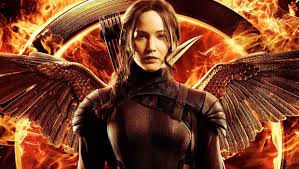 Hunger Games: Mockingjay Part I (2014). A continuation of the best
film of 2013, this film also is "one of the few films to self-consciously
examine media politics and the construction of character and emotion through
action" (see 2013 comments below). The film follows the book faithfully, as the
plot takes a new direction in following the heroine's moral and intellectual
development. The problem now is not just to sort out emotional ties but to learn
how to engage in psycho-political warfare through media. Much more subtle and
deep than the other "teenage angst films of 2014" (listed below) this film
addresses the real situation now faced by millennials -- especially in the Arab
world -- who understand what love and freedom should mean, but who are
unable to find any viable political routes to it. The credits are followed by a
beautiful animated logo that reasserts the reality of film's message to
totalitarian regimes. Hunger Games: Mockingjay Part I (2014). A continuation of the best
film of 2013, this film also is "one of the few films to self-consciously
examine media politics and the construction of character and emotion through
action" (see 2013 comments below). The film follows the book faithfully, as the
plot takes a new direction in following the heroine's moral and intellectual
development. The problem now is not just to sort out emotional ties but to learn
how to engage in psycho-political warfare through media. Much more subtle and
deep than the other "teenage angst films of 2014" (listed below) this film
addresses the real situation now faced by millennials -- especially in the Arab
world -- who understand what love and freedom should mean, but who are
unable to find any viable political routes to it. The credits are followed by a
beautiful animated logo that reasserts the reality of film's message to
totalitarian regimes.
|
 Interstellar (2014). Possible subtitles: "Gruber goes Galactic" or "Timeless Echoes of Hume and Plato." Hume states: "In general, it may be affirmed, that there is no such passion in human minds, as the love of mankind, merely as such, independent of personal qualities, of services, or of relation to ourself" (Treatise, II, 1). In other words, various forms of self interest motivate our actions; presuming that any abstractions such as "love of mankind" will motivate people is folly. Plato implies it is necessary for rulers to issue "noble lies" to the general public in circumstances where the truth would be too much for the public to bear. In other words, "Gruber" is a necessary political being. Interstellar deals with both of these ideas about our motives and political truths, as well with many more precise questions: (1)Are human beings multi-dimensional beings who can travel in time as well as space; (2) Are feelings of love, rather than the testimony of the senses or the machinations of reason, a signature of deep knowledge about the nature of reality? Interstellar will surely rank as the most philosophically rich film of 2014, although certainly not the best. Much of the plot and dialogue is more forced than it needs to be, so be prepared for much willing suspension of disbelief. Also be prepared for the mumbled dialogue of Matthew McConaughey, who makes the main character sound like he is only talking to himself most of the time. Great
Sci-Fi, such as 2001, Blade Runner, Terminator, GATTACA, or Avatar it's not, but still a must for 2014. Interstellar (2014). Possible subtitles: "Gruber goes Galactic" or "Timeless Echoes of Hume and Plato." Hume states: "In general, it may be affirmed, that there is no such passion in human minds, as the love of mankind, merely as such, independent of personal qualities, of services, or of relation to ourself" (Treatise, II, 1). In other words, various forms of self interest motivate our actions; presuming that any abstractions such as "love of mankind" will motivate people is folly. Plato implies it is necessary for rulers to issue "noble lies" to the general public in circumstances where the truth would be too much for the public to bear. In other words, "Gruber" is a necessary political being. Interstellar deals with both of these ideas about our motives and political truths, as well with many more precise questions: (1)Are human beings multi-dimensional beings who can travel in time as well as space; (2) Are feelings of love, rather than the testimony of the senses or the machinations of reason, a signature of deep knowledge about the nature of reality? Interstellar will surely rank as the most philosophically rich film of 2014, although certainly not the best. Much of the plot and dialogue is more forced than it needs to be, so be prepared for much willing suspension of disbelief. Also be prepared for the mumbled dialogue of Matthew McConaughey, who makes the main character sound like he is only talking to himself most of the time. Great
Sci-Fi, such as 2001, Blade Runner, Terminator, GATTACA, or Avatar it's not, but still a must for 2014.
|
Fury (2014). A general principle of films is that those set in a "historical" context tell us more about our contemporary consciousness of social/political/moral situations than they do about the actualities of the historical setting in which the action takes place. Fury is no exception to this principle. How should we react to the open brutality of totalitarians who terrorize their own people? Best line: "Ideals are peaceful. History is violent."
Teenage Angst films of 2014 These are all must sees for those following the zeitgeist:
The Hunger Games: Mockingjay - Part 1
The Maze Runner
Divergent
 The Amazing Spider-Man 2 (2014).
Perfect for the study of cultural themes as reflected in film. Most prominent among the themes -- and most importantly in terms of a global audience that includes
emerging nations where women continue to be second-class citizens -- is the autonomy and life choices of women. It is not unusual to find concise arguments written
into great scripts, but this film contains a particularly potent 3-phase formula for expressing a stance for contemporary women: (1) there is such a thing as over
protection of women; (2) women have their own autonomy that must be given both respect and concrete opportunities; and (3) where there is risk (even to life), women
themselves should be given the choice to assess and accept that risk. Also included (as so often in recent popular films) is the theme of psychic damage done to young
men by absent fathers. Still another aspect of modern life explored in this film: how lack of recognition and the alienation experienced by workers in large corporations
can lead to self-destruction and violence. Best Scene/Best Acting: Aunt May (Sally Field) explains to Peter/Spider-Man (Andrew Garfield) why he is her son. Best twist/plot
element: sorry, to reveal that would be a huge spoiler! Suffice it to say that apart from the technical/intellectual components of the script noted above, this edition of
Spider-Man is thoroughly enjoyable and works on many emotional levels. Recommended. The Amazing Spider-Man 2 (2014).
Perfect for the study of cultural themes as reflected in film. Most prominent among the themes -- and most importantly in terms of a global audience that includes
emerging nations where women continue to be second-class citizens -- is the autonomy and life choices of women. It is not unusual to find concise arguments written
into great scripts, but this film contains a particularly potent 3-phase formula for expressing a stance for contemporary women: (1) there is such a thing as over
protection of women; (2) women have their own autonomy that must be given both respect and concrete opportunities; and (3) where there is risk (even to life), women
themselves should be given the choice to assess and accept that risk. Also included (as so often in recent popular films) is the theme of psychic damage done to young
men by absent fathers. Still another aspect of modern life explored in this film: how lack of recognition and the alienation experienced by workers in large corporations
can lead to self-destruction and violence. Best Scene/Best Acting: Aunt May (Sally Field) explains to Peter/Spider-Man (Andrew Garfield) why he is her son. Best twist/plot
element: sorry, to reveal that would be a huge spoiler! Suffice it to say that apart from the technical/intellectual components of the script noted above, this edition of
Spider-Man is thoroughly enjoyable and works on many emotional levels. Recommended.
|
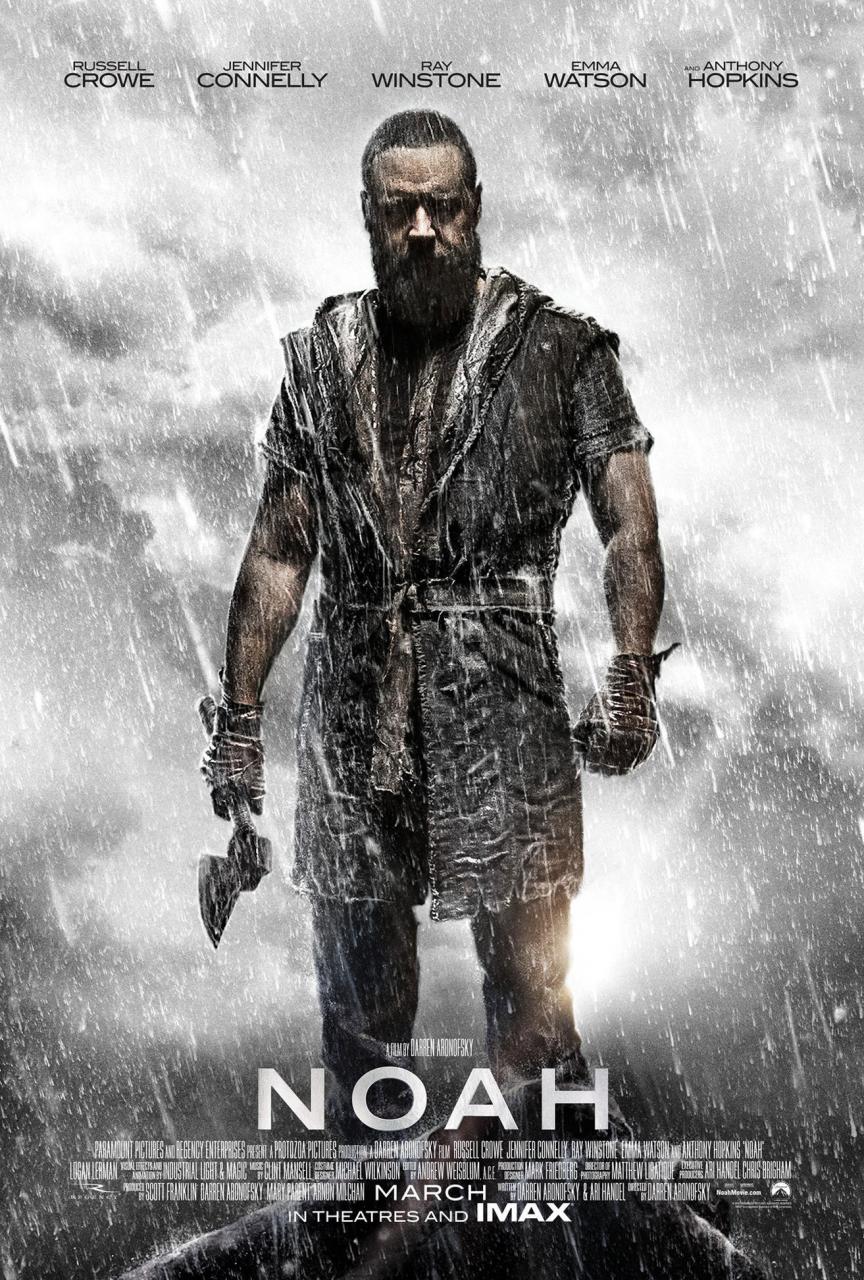 Noah (2014). Biblical Noah meets Alternate
Sci-Fi Universe meets Nietzsche. Contrary to popular belief, the Biblical story of Noah would not make a good film script. For a Hollywood-quality script, one needs a villain, a series of escalating crises, moral dilemmas, a confrontation with evil as personified in the villain, and a resolution showing the success of the hero. Noah has all of these elements, so it is a good film for study as well as for enjoyment. It fulfills the promise of radio ads promoting the film, which describe it as having taken artistic liberties with the Biblical story but in ways that are consistent with Biblical themes and values. Although some critics, and even the director of the film (Daren Aronofsky) have claimed the film identifies Noah as an environmentalist vegetarian, this is certainly not the moral focus of the film. As Plato observed, nothing prevents artistic creators from not understanding their own works at a philosophical level. We should be loath to accept the poet's interpretation of his own work. Noah (2014). Biblical Noah meets Alternate
Sci-Fi Universe meets Nietzsche. Contrary to popular belief, the Biblical story of Noah would not make a good film script. For a Hollywood-quality script, one needs a villain, a series of escalating crises, moral dilemmas, a confrontation with evil as personified in the villain, and a resolution showing the success of the hero. Noah has all of these elements, so it is a good film for study as well as for enjoyment. It fulfills the promise of radio ads promoting the film, which describe it as having taken artistic liberties with the Biblical story but in ways that are consistent with Biblical themes and values. Although some critics, and even the director of the film (Daren Aronofsky) have claimed the film identifies Noah as an environmentalist vegetarian, this is certainly not the moral focus of the film. As Plato observed, nothing prevents artistic creators from not understanding their own works at a philosophical level. We should be loath to accept the poet's interpretation of his own work.
The story apparently does not take place on Earth, at least not at any time within the last 100 million years or so (the daytime sky and the depiction of the global land mass does not correspond to our world) and the story adds a deus ex machina device in the form of
sci-fi creatures called "Watchers," although these may be thought to correspond (very loosely!) to the "giants in the earth" referenced to in Genesis. The moral dilemma is one that Nietzsche knew well: our free will is both a blessing and a curse; it demands that we take full responsibility for our acts and ultimately accept the idea that our will can be coincident with God's, if not in every respect, at least in the vital respects that correspond with the promise of human flourishing symbolized by the rainbow (the last image of the film). Highly recommended. A great study piece and one that represents contemporary spiritual, theological, and philosophical dilemmas quite well.
The film was banned in the many Islamic countries, ostensibly for "depicting a prophet," but perhaps also (admittedly, just a guess here) for superimposing the story of Abraham -- a vital key to Islamic theology -- onto Noah.
Best lines: "A man is not ruled by the heavens but by his will. So I ask you, are you a man? Good. Then you can kill."
Trailers: http://www.imdb.com/title/tt1959490/?ref_=fn_al_tt_1
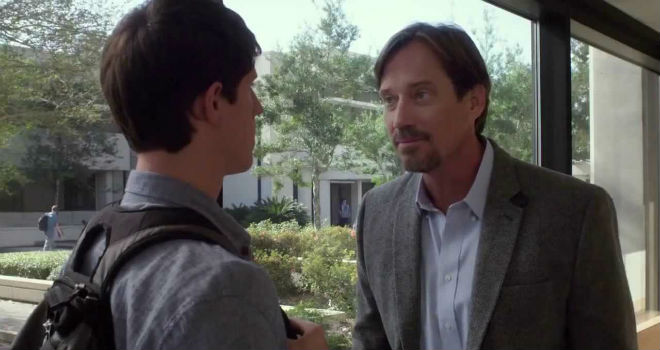 God's Not Dead (2014). For professional critics of popular culture only. Amateurs will not enjoy this film, since they will see nothing but over the top preaching about the beauty of Christianity. Professionals will understand that the film is not about Christianity as much it is about freedom of choice and the fact that humans must cope with totalitarian intellectual repression, loss of love, death, and disease. The story is based on actual court cases where universities have attempted to limit the freedom of speech and association of on-campus Christian groups. If you are a university-level academician, you will have a hard time suspending your disbelief about the initial story premise: a philosophy professor makes signing a declaration that "God is dead" worth 30% of the course. Hopefully, any professor actually caught doing that would be summarily fired. Put that aside, accept the premise, and enjoy the film. The film contains three powerful, emotional subplots that some viewers will find more than make up for any weaknesses in the principal story line. A good example of the overt politicization of film (as opposed to the more covert, as in The Hunger Games). God's Not Dead (2014). For professional critics of popular culture only. Amateurs will not enjoy this film, since they will see nothing but over the top preaching about the beauty of Christianity. Professionals will understand that the film is not about Christianity as much it is about freedom of choice and the fact that humans must cope with totalitarian intellectual repression, loss of love, death, and disease. The story is based on actual court cases where universities have attempted to limit the freedom of speech and association of on-campus Christian groups. If you are a university-level academician, you will have a hard time suspending your disbelief about the initial story premise: a philosophy professor makes signing a declaration that "God is dead" worth 30% of the course. Hopefully, any professor actually caught doing that would be summarily fired. Put that aside, accept the premise, and enjoy the film. The film contains three powerful, emotional subplots that some viewers will find more than make up for any weaknesses in the principal story line. A good example of the overt politicization of film (as opposed to the more covert, as in The Hunger Games).
FILMS OF SPECIAL INTEREST
 Tuesday Morning in September - In a class by itself. Spontaneous, live documentary and creative film-making at its best. One might compare this to the reporting of the famous Hindenburg disaster of 1937, but this story unfolds from a completely innocent beginning. On the morning of September 11, Jim Kosior, an actor in NYC, was recovering from back surgery. Unable to sleep that night due to pain, he decided to hone his skills as a videographer by making a chronicle of an entire day. As he often did, he went downstairs to join his friend Hussein for breakfast. Not long
afterwards, he received a call that a plane had hit the World Trade Center. He went upstairs to his own apartment and started recording. From his vantage point, he could see almost all of New York City, including the Twin Towers, the Empire State building, and the Statue of Liberty. Within minutes, the second plane hit...and for the next two hours Jim faithfully recorded all of the events to follow. Without substantial inputs from the news media, the personal, political, and tragic story unfolds from the perspective of a single individual who witnesses one of the most important events of the last 50 years. Jim's level-headed commentary is uncanny in both descriptions and predictions related to this event. Remarkably, the video also tells a human, individual story, that culminates in reflective peacefulness. Tuesday Morning in September - In a class by itself. Spontaneous, live documentary and creative film-making at its best. One might compare this to the reporting of the famous Hindenburg disaster of 1937, but this story unfolds from a completely innocent beginning. On the morning of September 11, Jim Kosior, an actor in NYC, was recovering from back surgery. Unable to sleep that night due to pain, he decided to hone his skills as a videographer by making a chronicle of an entire day. As he often did, he went downstairs to join his friend Hussein for breakfast. Not long
afterwards, he received a call that a plane had hit the World Trade Center. He went upstairs to his own apartment and started recording. From his vantage point, he could see almost all of New York City, including the Twin Towers, the Empire State building, and the Statue of Liberty. Within minutes, the second plane hit...and for the next two hours Jim faithfully recorded all of the events to follow. Without substantial inputs from the news media, the personal, political, and tragic story unfolds from the perspective of a single individual who witnesses one of the most important events of the last 50 years. Jim's level-headed commentary is uncanny in both descriptions and predictions related to this event. Remarkably, the video also tells a human, individual story, that culminates in reflective peacefulness.
I highly recommend this film for aficionados of documentary films, live reporting, and spontaneous creativity, as well as those who need to understand 911 at a deeper level. You can see portions of the video on YouTube and get more background on it by visiting
http://tuesdaymorninginseptember.net/ or http://www.facebook.com/TuesdayMorninginSeptember. Might also be used in academic settings, such as courses on film, history, or politics. Not recommended for children. If you are interested in using this film in an academic setting, contact me for information about evaluation copies.
ANALYTICAL TOOL
At present (2015) this is an unfinished tool that can
be used in the analysis of film narratives. It makes use of several ideas not
often mentioned in the study of film narratives, including cosmic justice.
Currently, with so many films appearing that are "based on true stories," some
of these ideas may need to be rethought.

THE STRUCTURE OF FILM NARRATIVE
Diagram interface for 15 additional pages that explore the relationships of elements involved in the production and viewing of films. A combination of ideas from Plato and Aristotle, with some common sense about narrative structures. Click on each node to show pages. The interface is a little temperamental, and it can be difficult to get the "little hand" to pop up for each node, but there are 15 pages accessible through the diagram. The diagram is meant to indicate the built-in transcendental nature of film narrative structure as well as the common-sense interrelationships among the various sources of meaning (interpretive contexts) available in contemporary life. In progress.
|
ARCHIVES
BEST OF 2013
 Kaze tachinu (2013). This is one of the best films of 2013. It must be seen in a theater to be fully appreciated.
A stunning film with visual as well as emotional impact. More info at IMDB:
http://www.imdb.com/title/tt2013293/?ref_=nv_sr_1 Kaze tachinu (2013). This is one of the best films of 2013. It must be seen in a theater to be fully appreciated.
A stunning film with visual as well as emotional impact. More info at IMDB:
http://www.imdb.com/title/tt2013293/?ref_=nv_sr_1
The Hunger Games: Catching Fire (2013). Like its predecessor, one of the few films to self-consciously examine media politics and the construction of character and emotion through action. Ingenious plot demonstrates how power politics and totalitarian regimes must seek to outsmart the human desire for freedom and autonomy. China, and other totalitarian regimes: Beware! Required viewing for students of popular culture. As in the case of Roller ball, unenlightened audiences go to see an action/adventure story and completely miss the point. Great material for academic film studies assignments. Not for children.
Ender's Game (2013). Another example of Hollywood's tendency to ignore script complexities and character development and concentrate on explosions and flashing lights. Fails to capture the complexity of Card's visionary novel about the future of warfare. Optional viewing for those seeking quality in entertainment.
Thor: The Dark World (2013). Continuation of the series with a predicable plot, save some twists introduced by Loki (Tom Hiddleston).
Blue Jasmine (2013). Film School. Acting School. Directing School. Every element in this film works. No other film this year is likely to achieve the depth and sophistication of this great commentary on the psycho-social ills of contemporary life. An alternate universe in which we see, as if first-hand observers, the willful self-deception and psychic destruction wrought by the likes of Bernie Madoff.
 Star Trek: Into Darkness (2013). Ethics 101 meets "How Spock Went Postal." Ever since its inception as a TV series, Star Trek has exhibited acute awareness of current social and political struggles. Although it's not in the news as an explicit topic, one such struggle today is to find new foundations for ethics. Spock provides one of the most significant voices in popular culture for Utilitarianism, the philosophy invented by Jeremy Bentham and John Stuart Mill, which holds that the best acts are those that provide the greatest happiness for all parties concerned and one's individual happiness should not be given extra consideration -- or, as Spock put it in the 1982 edition of the film series, "the needs of the many outweigh the needs of the few." Today, utilitarianism and its long-time rival in ethical theory, Kantian Ethics, have fallen on hard times, victims of cultural relativism and Feminist, or Care Ethics. Relativism, the idea that there are no foundations for ethics other than one's own individual choices or one's own culture, is a non-starter for the majority of professional philosophers. Care Ethics, on the other hand, is popular in the profession and in popular culture. In fact, "caring" has become a measure of personal moral integrity. Romney lost the election in part because he supposedly did not care about 47% of the electorate. There is some validity in the notion that ordinary human feelings of empathy ought to play some role in ethical decisions, but Care Ethics does not provide sufficient measures of proportion and logic to be a complete guide for an ethical life. This was made clear in one of Obama's comments about health care. When asked if his program would provide benefits for an elderly grandmother who still had a will to live, Obama -- the "caring" candidate -- quickly reverted to a Utilitarian stance. He replied that decisions would be made scientifically and insubstantial emotions could not be considered. In Into Darkness, Spock and Uhura banter about the relative merits of Care and Utility in a way that actually provides comic relief to the film's darker subject matter: terrorism and personal revenge. In the end, Spock finds it impossible to retain a perfect balance between Care and Utility, a symbolic reflection of the contemporary dilemmas in ethical theory. Fans will find a great deal to like in this film and students of film will also enjoy an invigorating and complex script that abounds with echoes of previous Star Trek films and anticipates new frontiers in the series. Highly recommended.
After Earth (2013) -- If you want a film for an essay about how contemporary popular cinema attempts to deal with specific social problems, this is it. The topic is the destruction of the Black family in America. Seventy-three percent of Black children in the U.S. are born of wedlock and the number of Black males who have been brought up without a father figure reached a crisis point many years ago. A predictable, yet touching film with the quiet ambiance of other M. Night Shyamalan films. Inner monsters of resentment against absent fathers become the unseeing monsters of After Earth.
COMMENT ON THE OSCARS OF 2012
The themes of this year are the transformation of history and the superposition of preferred narrative outcomes on reality. These themes apply to The Life of Pi, Zero Dark Thirty, Lincoln, and The Hunger Games. Of these, only The Hunger Games achieves a sophisticated treatment of these themes with critical self awareness.
BEST OF 2012
 Zero Dark Thirty (2012) -- This film would make a great bookend to Tuesday Morning in September (see comments above). The teaching potential for considering these two films together is enormous: they frame the events of 911 from its raw, unexplained, beginnings to its fulfillment in the unrelenting pursuit of knowledge and justice. Both are stunning, grim, and full of moments that call for deep reflection. Three-quarters of Zero Dark Thirty leads up to the moment that I suspect provides the reason for most audience members to attend: a hyper-real recreation of the events at Bin Laden's compound in Islamabad, Pakistan. Although this part of the film manages to capture the sense of being there, this is only a footnote to the real moral lesson of the film. No other film this year is such a profound study on the trials and tribulations of an unrelenting pursuit of a single cause and the virtue of perseverance in the pursuit of justice. See it.
Lincoln (2012) -- A good and informative film, but certainly not a great film by any means. Another film that may be said to be about "an unrelenting pursuit of a single cause," but one which seems to cheapen the cause by making the story more about the legal and psychological manipulation than morality. Optional viewing.
 Life of Pi (2012) -- I can't explain the high ranking given to this film by Roger Ebert and so many other critics and sites. Like Cast Away, it lacks the essential structures necessary for a good film. The story is introduced as one "that will make you believe in God." Or not. Optional viewing.
The Master (2012) -- An enigmatic film with great performances. Those who enjoy "deeper" films that do not fit the templates of popular culture will likely judge it this year's masterpiece. The basic plot/character configuration shares much in common with The Razor's Edge.
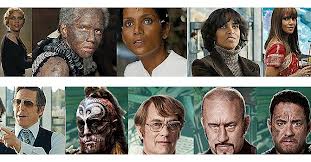 Cloud Atlas (2012) -- Just when you think Hollywood has nothing more to offer, that everything has been explored and exploited, that plot complexity must never challenge a 10-year old, something like this comes along. There is nothing I can say by way of ingenious commentary that will adequately prepare you or lend new possibilities to interpretations for this film, which resonates with everything from Amistad, to Metropolis, to Star Trek. Just see it. Be prepared for story lines that span three centuries. As always, stay for the credits. You will be surprised!
To Rome with Love (2012) -- Woody Allen's magical mystery tour of existential romances, set in the world's great cities, continues. We move from Paris (Midnight in Paris) to Rome. This time, the all star cast includes two of Italy's greatest stars, opera singer Fabio Armiliato and actor/comedian Roberto Benigni (Life is Beautiful), not to mention the outstanding talents of Alec Baldwin, Penelope Cruz, Jesse Eisenberg (Friends), and Ellen Page (Juno). Having this much talent in one film alone makes it worthy of mention, since the demise of the studio contract system has made it difficult to produce films with all-star casts. Ellen Page -- cast as a pseudo-intellectual seductress -- is a scene-stealer, and by far the most interesting character. Roberto Benigni depicts the confusion and anxiety of instant fame with comic
perfection. Fabio Armiliato, in his acting debut, accepts his surreal assignment of singing great arias in the shower (on stage!) with sublime nonchalance. Great actors all, but none face the acting challenges faced in other, more conventional, popular films -- for example, the nuances required of Jennifer Lawrence in The Hunger Games. Allen's multi-level themes include love, sexual promiscuity, and fame in a world where authentic human drives are subverted by a infotainment industry gone mad. A must see.
The Dark Knight Rises (2012) -- Inexplicably popular. Lends credence to the idea that people do, after all, like mindless entertainment. Lacks the self-aware script humor of The Avengers and the acting subtlety of The Hunger Games.
The Amazing Spider-Man (2012) -- A remake of the iconic 2002 version. Optional viewing.
 The Avengers - Witty, often funny, yet filled with great, thought-provoking one-liners. Among the many themes/ideas packed into single lines:
There is only one God
Evil people never win -- they lack conviction
People keep an emotional/moral ledger that they need to balance (wipe out the "red")
An unruly people can never be ruled
Germany will "never forget"
Features not one, but two, teasers during the credits. The first previews a new bad guy, Thanos, who is even worse than Loki. The second is priceless. (No hints, don't want to spoil it for you, but it's worth the wait.)
Excellent characters, great acting keeps the story line true to the others in the series. A great example of how intellectual content is inserted into what many critics dismiss as mindless entertainment for the masses. A timely film, this flows with many current political/moral currents.
 The Hunger Games - A study on reality TV and the interplay of media and individual choice in constructing personality. The use of cinema verite (hand held camera that takes us out of mode of "distant" viewing of the narrative and places us "there" in the moment) is annoying at first, but it becomes clear that conceptual artists of the film mean to make a statement about the tenuous divisions between reality and fabrication, real emotion and put-on emotion, deep love and on-camera love. Not about adventure and sick killing sprees of blood-thirsty young, as some popular media would have it, but about how human sentiments are constructed out of the raw material of media-enhanced human interactions. A cautionary tale of social and political control and individual defiance in the vein of The Truman Show or Roller ball -- films that derive from the allegory of Plato's Cave -- that leaves you pulling for a "real" life outside the Cave. Required viewing for all film aficionados. Oscar bound. The image captures the stunned, hurt, and confused state of the heroine at the start of the film.
John Carter - An interplanetary love story. Emotionally, a poetic expression of redemption through love overcoming loss in the past through hope. Politically, a hymn to the value of fighting for a for a cause greater than one's self. Psychologically, multiple, simultaneous tales about how rule-breakers and loners can survive and thrive. Captures the heart of Burroughs's master work, started in 1912, the 11-book Mars series. John Carter is the prototype for Superman: weakened gravity on another planet makes him stronger than anyone else. In the series, Carter is himself an immortal warrior who primarily loves fighting. Yet, he is also a peace-maker who eventually unifies the warring races of Mars. Some of the most fascinating aspects of the film are those that will be invisible to the audience: the changes made to Burroughs's original story. Gone are the vicious Indians who torture and kill Carter's friend. Gone is the mysterious, and never fully explained, transmission of mind/body to Mars. Disney's rewrite makes Carter a reluctant recruit in fighting Indians, introduces
Therns as Interplanetary agents who enable and control mind/body transportation. These enhancements to Burroughs's conceptual framework improve the story and make it more relevant for contemporary audiences. Visually, the story remains true to Burroughs's ideas, as developed through the original drawings in some of the printed versions of the books, and as expertly crafted by Marvel in its comic book series. This is a great film on many levels. Look for Oscar nominations in technical areas in 2012.
IMAGE PROCESSING IN THE VISUAL ARTS
Image Processing in the Visual Arts - Entering the Imagosphere. Slide show with sound commentary. Uses examples from wide variety of visual arts, including Michelangelo and Marvel Comics. Note: This is a prototype; the "speech" is more or less spontaneous. There are a few cases where the last item on the slide is not fully explained. I was limited to 60 seconds per slide. The sound starts simultaneously with each slide. Disable popup blockers if you do not hear sound. Feedback welcome for this experimental talk. If you use any of the material here in a paper or presentation, let me know.
BEST OF 2011
Like many other recent years in film, not a particularly good year.
Midnight in Paris - One of Woody Allen's finest, although not his greatest. Reverses the standard Hollywood technique of putting message in the subtext by overtly discussing and critiquing a philosophy of life.
Hugo - Most over-rated film of 2011. Nice homage to film history. Sacha Cohen is outstanding, but the story lacks depth.
The Artist - Best aesthetics of 2011. Restores values of original screen aspect ratio. A meditation on the meaning of conventions in acting and how the human face communicates emotions.
The King's Speech - Among the very best of 2011. Excellent acting combines with good story to produce a great effect.
Drive - Not seen. But probably of great interest for those who like to see innovations in plot and thematic structure, since it apparently provides, in the words of Roger Ebert, "a rebuke" to the action/thriller films that it looks like on the surface.
Real Steel - Rocky meets the world of robots and avatars. One of the best stories of 2011, a great example of how contemporary social problems are addressed through the thematic subtexts. In this case, the epidemic of fatherless children and children from broken homes. A great story idea and well-executed, although weakened by the completely unconvincing performance by Evangeline Lilly as the would-be mother. In many ways, a better and more meaningful story than The Artist.
Thor - Another of Marvel's most popular characters. Like Captain America, this film provides the backstory for the character, establishing his inner conflict (estrangement from his father) as well as his new-found cause (protecting mere mortals). In the Marvel universe, Thor has been created and destroyed more than a dozen times. This Thor represents just one psychological type. The evil Loki is a stand-in for the disruptive/destructive forces recognized in Norse mythology, a trope use in many films, including the Star Wars sextet.
Captain America - Classic plot structure, utilizing escalating difficulties for hero and final villain/hero confrontation. Basic plot is true to the first issue of Marvel's comic in 1941. A well-crafted film throughout, with good performances by excellent cast.
HOW TO VIEW A FILM
This section would be longer, but for the fact that it is now virtually impossible to view a film in the United States, since most theaters are populated with people who are CONSTANTLY TALKING. The only solution I know is to try to go when no one else does. Try the last show on Sunday.
WOULD YOU LIKE TO COMMENT? DO YOU HAVE SUGGESTIONS FOR THIS SITE?
Feel free to contact me if you have a comment or question regarding any material on this site. I welcome your suggestions for additional links.
|
